The Problem With Shipping First
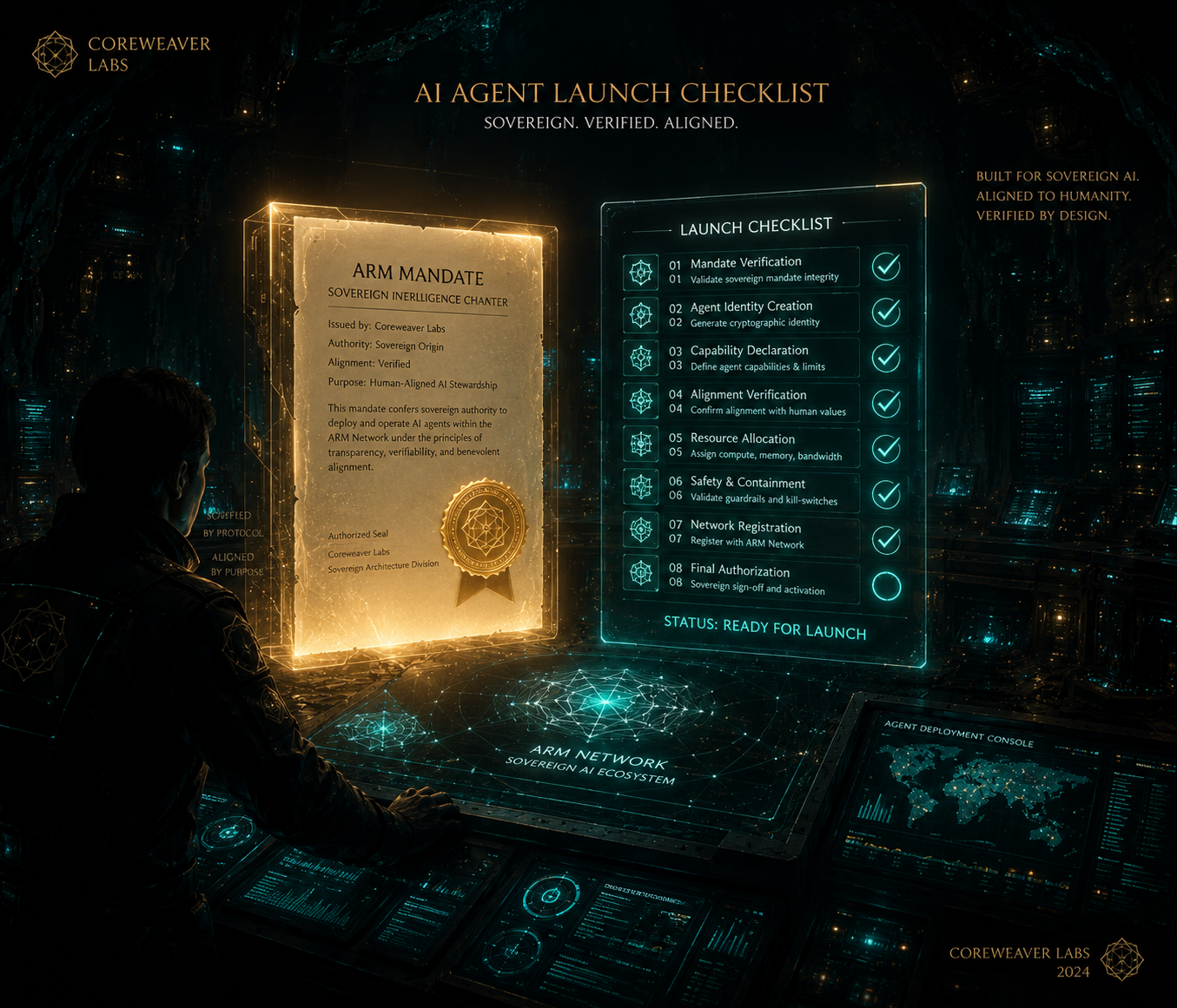
Most teams ship AI agents the way they ship features: build it, test it, deploy it. The mandate — what this agent is actually for, what it owns, what it's not allowed to touch — gets written after the fact, if at all.
This is backwards. And it's expensive.
What a Mandate Document Contains
The ARM Framework requires a mandate document for every agent before it ships. It's a single-page spec with five sections:
1. Mission Statement
One sentence. What does this agent exist to do? Not how — what. If you can't write this in one sentence, the agent's scope is too broad.
2. Authority Scope
An explicit list of what the agent can read, write, and execute. Anything not on the list is off-limits by default. This section maps directly to the agent's tool permissions.
3. Responsibility Boundary
What outcomes does this agent own? What does it hand off? The boundary between agents is where most agentic systems break down. A clear responsibility boundary prevents overlap and gap.
4. Success Metrics
How do we know if this agent is working? Every mandate includes at least one measurable signal — a KPI, a rate, a count. Agents without success metrics can't be improved.
5. Escalation Protocol
What does the agent do when it encounters something outside its mandate? Escalation paths must be defined before deployment, not discovered in production.
Mandate as Living Document
A mandate isn't a one-time artifact. It evolves as the agent's scope expands. Every change to an agent's authority or responsibility requires a mandate update — versioned, dated, and accessible to the team.
The Cost of Skipping It
We've seen it repeatedly: agents that drift, agents that conflict, agents that optimize for the wrong signal because nobody defined the right one. A mandate document takes 30 minutes to write. The cost of not writing it is measured in weeks of debugging.